What Is House Power Washing, Really?
You notice it slowly. The siding looks dull. The driveway has dark streaks. The north side of the house has that green film creeping back again. If you’ve been asking what is house power washing, you’re really asking a practical question: what kind of cleaning does your home need, and is it the right fix for the dirt, stains, and buildup you can actually see?
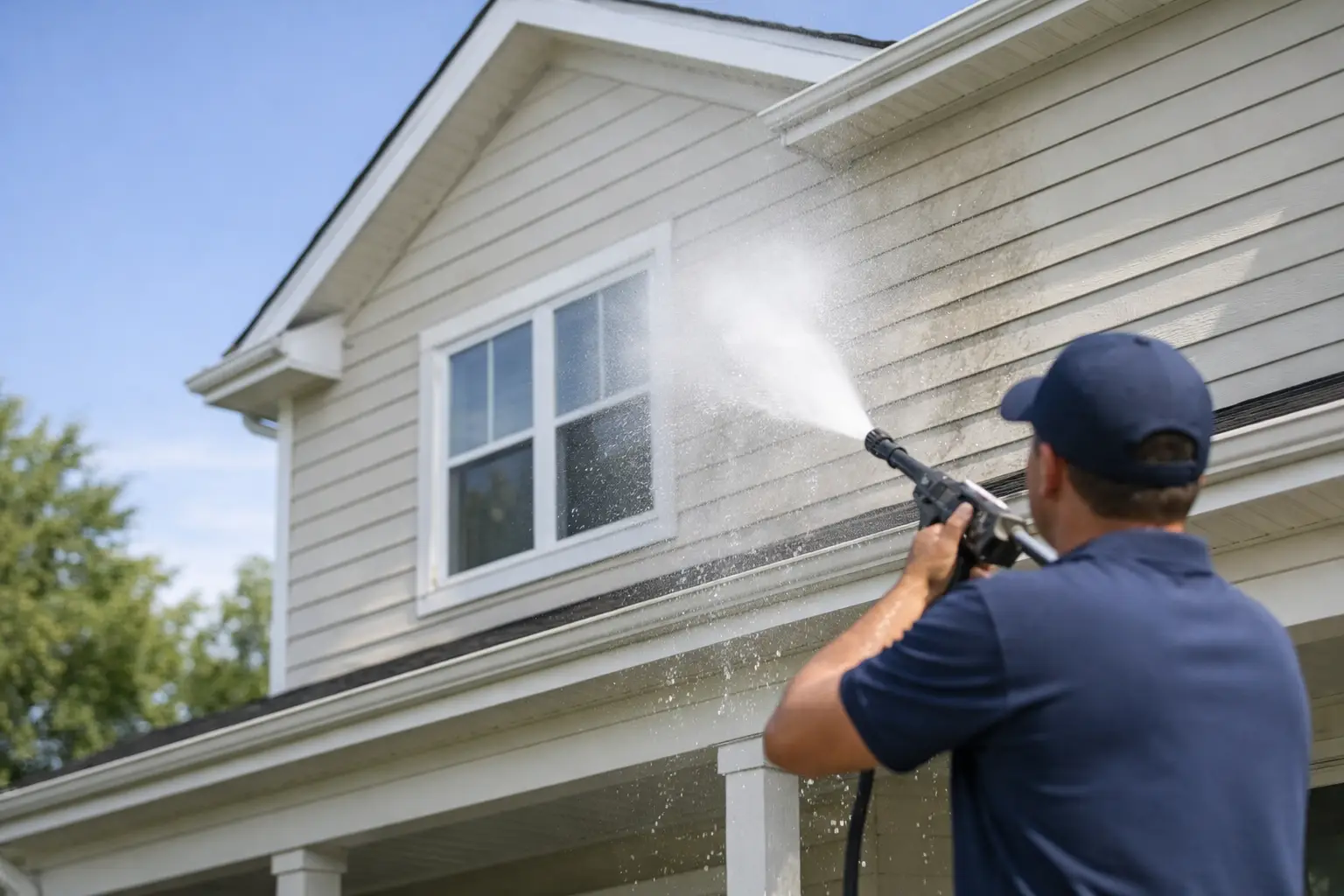
House power washing is the use of pressurized water to clean exterior surfaces around a home. Depending on the equipment and the surface being cleaned, that process can remove dirt, mildew, algae, mud, cobwebs, and years of grime. People often use the term loosely, but the real answer depends on pressure, water temperature, and the material being cleaned.
What Is House Power Washing?
At its core, house power washing is exterior cleaning with high-pressure water. In some cases, the water is heated. In others, it is not. The goal is simple: break loose buildup that normal rinsing or scrubbing will not remove efficiently.
For homeowners, this usually applies to siding, brick, concrete, patios, walkways, porches, fences, and other outdoor surfaces that collect grime over time. A good wash can brighten the whole property fast, which is one reason people often schedule it before listing a home, hosting guests, or tackling seasonal maintenance.
That said, not every part of a house should be cleaned the same way. This is where the topic gets more useful than the basic definition.
Power Washing vs Pressure Washing
People use these terms interchangeably, and in everyday conversation that is fine. But there is a technical difference.
Pressure washing uses pressurized water. Power washing typically uses pressurized hot water. The added heat can help cut through grease, stuck-on grime, and certain stains more effectively, especially on hard surfaces like concrete.
For many homes, the bigger issue is not whether the machine uses hot water. It is whether the pressure is appropriate for the material. Concrete can usually handle much more force than vinyl siding or painted wood. Using too much pressure in the wrong place can leave marks, strip paint, force water behind siding, or damage trim.
That is why experienced technicians do not treat every exterior surface like a driveway.
What Surfaces Can House Power Washing Clean?
House power washing can be a great fit for some surfaces and a bad fit for others. It depends on age, condition, and material.
Concrete driveways, sidewalks, and patios are common candidates because they hold up well and show visible improvement quickly. Brick can often be cleaned effectively too, although older mortar may need more care. Some decks, fences, and retaining walls can also benefit from washing, but the approach has to match the material.
Siding is where homeowners should slow down and ask more questions. Vinyl siding may look tough, but blasting it with too much pressure can crack panels or drive water where it does not belong. Painted surfaces can chip. Older wood can splinter. Stucco can be especially tricky.
In many cases, a lower-pressure method is the better choice for the house itself.
When Soft Washing Makes More Sense
If you are researching what is house power washing, it helps to know that not all exterior cleaning should be high pressure. Soft washing uses lower pressure along with cleaning solutions designed to break down algae, mildew, bacteria, and organic buildup.
This method is often safer for siding, trim, painted surfaces, soffits, and other areas where high pressure can do more harm than good. It is also often more effective on organic staining because it treats the cause instead of just blasting the surface clean for the moment.
That trade-off matters. High pressure can remove visible grime fast, but if algae and mildew are the main problem, soft washing may give you a longer-lasting clean. It is not about using less power because someone is being cautious. It is about using the right method for the actual job.
What House Power Washing Removes
A proper exterior wash can remove a surprising amount of buildup. Dirt and dust are obvious, but many homes also collect pollen, spider webs, bird droppings, mildew, algae, and black streaks from runoff.
On hard surfaces, washing can also improve traction by removing slippery grime. That matters on walkways, entry areas, and patios where buildup can become a safety issue after rain.
Still, there are limits. Some stains are too deep, too old, or too chemically set to disappear completely. Rust stains, oxidation, oil spots, and certain hard water marks may lighten rather than vanish. A good service should set clear expectations instead of promising every stain will look brand new.
Why Homeowners Schedule It
Most people do not book exterior cleaning because they suddenly become passionate about spotless siding. They do it because the house looks tired, they want to protect what they own, or they are getting ready for something important.
A clean exterior improves curb appeal right away. It can also help preserve surfaces by removing contaminants that sit for months or years. Algae and mildew are not just ugly. Left alone, they can contribute to wear and make the home look older than it is.
For homeowners in areas like Bettendorf, Davenport, LeClaire, and Eldridge, seasonal changes add to the problem. Moisture, shade, wind, and debris all play a role in how quickly buildup returns. A home surrounded by trees may need more frequent attention than one in full sun. A north-facing wall may stay damp longer and show green staining first.
So the real schedule depends on your property, not a one-size-fits-all rule.
Is House Power Washing Safe?
Yes, when it is done correctly. No, when it is not.
That may sound blunt, but it is the truth. Exterior cleaning equipment is powerful enough to damage surfaces and create injury risk in inexperienced hands. The danger is not just visible gouges or chipped paint. Water can be pushed into cracks, around windows, behind siding, and into places that should stay dry.
There is also the ladder issue. Reaching upper-story areas with pressurized equipment is not a casual weekend project. Between slippery surfaces, electrical fixtures, landscaping, and delicate trim, there is a lot to manage.
Professional service matters because technique matters. The right nozzle, distance, angle, cleaning solution, and pressure level all affect the result.
Signs Your Home May Need Washing
Sometimes it is obvious. Sometimes you only notice after one section gets cleaned and suddenly the rest looks older than you thought.
Watch for green or black staining on siding, dingy concrete, cobweb buildup around eaves, discoloration under gutters, and slippery patches on walkways. If your windows still look dirty even after the glass is cleaned, the surrounding frames, trim, or siding may be part of the problem.
That is one reason exterior services often work well together. Clean windows stand out more when the surrounding surfaces are clean too. If the house exterior is streaked with grime, even spotless glass can only do so much.
Should You Do It Yourself or Hire It Out?
For very small, low-risk jobs on durable surfaces, some homeowners choose to handle it themselves. If you are cleaning a small concrete pad and understand the equipment, that can be reasonable.
But for full-house washing, second-story work, delicate siding, or surfaces with oxidation, paint, or existing wear, the margin for error gets small fast. Renting a machine is easy. Knowing how to use it well is the part that saves you money and frustration.
Hiring a trained, insured crew usually means better results, less risk, and less time spent guessing. It also means someone can tell you honestly when power washing is the right answer and when a softer approach is smarter.
If you want the exterior of your home to look cleaner without taking chances on the wrong method, Diamond Window Washing can help you figure out what makes sense for your property and handle the job professionally.
What to Expect From a Professional Service
A professional house washing service should start by looking at the surfaces, not by quoting the same process for every home. Material type, height, staining, access, and condition all matter.
From there, the cleaning method should match the surface. Concrete may call for stronger pressure. Siding may need soft washing. Windows, fixtures, and landscaping may need protection during the job. After cleaning, you should expect a visibly fresher exterior, with realistic guidance on any stains that may remain.
The best result is not just a cleaner house for a few days. It is a safer, better-maintained exterior cleaned with the right level of care.
If you have been wondering what is house power washing, the short answer is this: it is a useful tool for cleaning a home’s exterior, but the real value comes from using the right method on the right surface. A clean house should not come at the cost of damaged siding, stripped paint, or water where it does not belong. When the approach is matched to the material, the results speak for themselves.