How to Clean Residential Windows Right
Clean windows can make a house look better in about five minutes flat. The problem is that many homeowners try to figure out how to clean residential windows, only to end up with streaks, missed corners, or glass that somehow looks worse once the sun hits it. Good results come down to the right tools, the right timing, and a method that keeps dirt from getting pushed around.
If you want windows that actually look clear, it helps to treat the job like more than a quick spray-and-wipe. Residential glass picks up pollen, dust, hard water spots, fingerprints, and outdoor grime that all behave a little differently. Some windows clean up easily. Others need a more careful approach, especially if screens, tracks, or second-story access are involved.
How to clean residential windows without streaks
The first thing to know is that bright, hot sun is not your friend. Warm glass dries cleaning solution too quickly, which is one of the biggest reasons streaks show up. A cloudy day, or at least a shaded side of the house, gives you more working time and better results.
Start by gathering a few basic tools. A bucket, a soft scrubber or microfiber applicator, a quality squeegee, clean microfiber cloths, and a gentle cleaning solution will handle most home window cleaning jobs. You do not need a shelf full of specialty products. In most cases, a small amount of dish soap mixed with water works well for routine dirt and dust.
Before any liquid touches the glass, remove loose debris. Brush or vacuum the window tracks and wipe down the sill. If you skip that step, dirt can mix with your cleaning solution and create a muddy mess that gets dragged back onto the glass. Screens should also come off if possible so you can clean the whole surface properly.
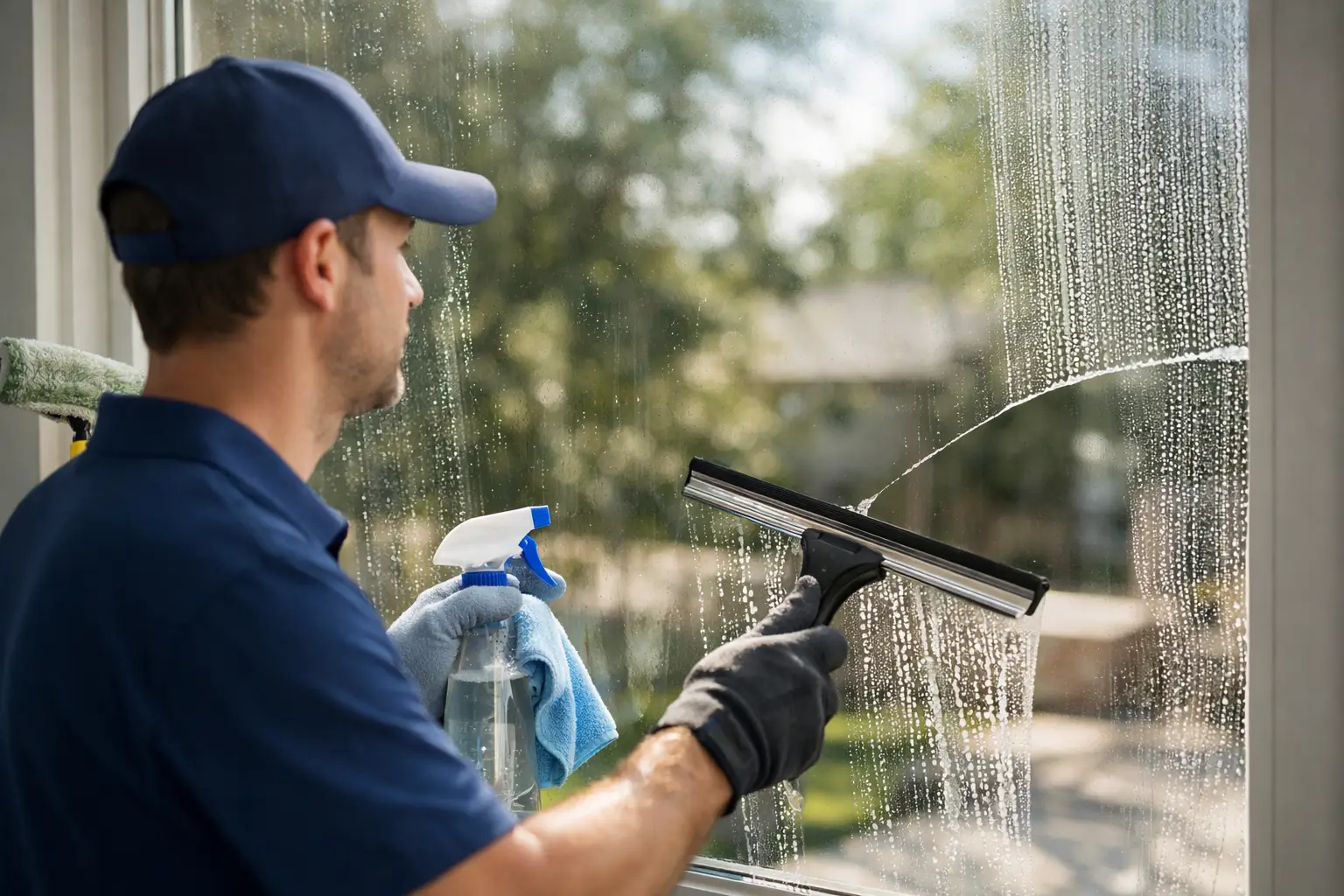
Once the area is prepped, wet the glass with your applicator and cleaning solution. Be generous enough to loosen grime, but do not flood the frame. Use your scrubber to break up buildup, especially along edges where dirt tends to collect. Then use the squeegee in smooth, controlled passes, wiping the blade with a clean cloth after each pass. That one habit alone makes a noticeable difference.
Finish by detailing the edges with a dry microfiber cloth. This catches the small beads of water a squeegee can leave behind. If you use paper towels, you may end up with lint on the glass, which defeats the point.
The tools that matter most
Plenty of homeowners try to clean windows with spray cleaner and a rag because it feels simple. On small interior touch-ups, that can be fine. But for full residential window cleaning, especially outside, that method often spreads grime instead of removing it.
A squeegee is the tool that changes the result. It pulls dirty water off the glass instead of smearing it around. A microfiber applicator helps lift dirt without scratching, and microfiber detailing cloths are better than old T-shirts or paper towels because they leave less residue.
The quality of the water matters too. In areas where hard water is common, mineral content can leave spots if water dries on the glass. That is one reason exterior windows sometimes still look hazy after a homeowner cleans them. If your tap water leaves visible residue elsewhere around the house, your windows may need extra drying and detailing to look truly clear.
Ladders are another tool worth talking about, mostly because they are where a simple cleaning job can become risky. Ground-floor windows are usually manageable for a homeowner. Upper-story windows are a different story. Reaching over landscaping, uneven ground, or concrete steps adds a level of hazard that is easy to underestimate.
A better step-by-step approach for inside and outside glass
Interior windows usually need less aggressive cleaning than exterior ones, but they still benefit from a system. Dust the frame first, then clean the glass from top to bottom. If there are fingerprints, pet nose marks, or kitchen grease nearby, spend a little extra time loosening that film before wiping or squeegeeing.
Exterior windows need more prep. Rinse or wipe away loose dirt first if there is heavy buildup. Then wash the glass with your cleaning solution and scrubber. Work one window at a time so the solution does not dry before you remove it. Pull the squeegee across the glass with steady pressure, overlapping each pass slightly.
For divided-light windows or glass with grids, the work takes longer because there are more edges where water can collect. In those cases, patience matters more than force. Trying to rush detailed panes usually means more touch-up work later.
Screens deserve attention too. A dirty screen can make a clean window still look dull. Wash screens gently with water and a soft brush, then let them dry before reinstalling. Tracks can be wiped out with a damp cloth after loose debris is removed. These are small details, but they affect the finished look.
Common mistakes that make windows look worse
Too much cleaner is one of the biggest problems. More soap does not mean cleaner glass. It usually means more residue to remove. A light solution works better and is easier to squeegee clean.
Another mistake is cleaning in direct sunlight. Fast drying sounds helpful until it leaves lines and spots before you can finish. Dirty tools are another issue. If your cloths are full of lint or your squeegee blade has a nick, the glass will show it.
There is also the issue of expectations. Not every mark on a window is surface dirt. Paint specks, hard water stains, oxidation from old frames, and failed seals can all affect appearance. If the glass still looks cloudy after proper cleaning, the problem may not be something a standard wash can fix.
When DIY window cleaning makes sense and when it doesn’t
If you have accessible windows, mild buildup, and the time to do the work carefully, cleaning your own windows can be worthwhile. It is a practical home maintenance task for many homeowners, especially on lower levels.
But there are clear limits. Second-story windows, storm windows, difficult access points, and heavy mineral staining often make the job more frustrating than expected. Safety is the bigger concern. Window cleaning seems simple until you are stretched sideways on a ladder trying to reach the last corner.
That is where professional service starts to make more sense. Trained technicians use the right tools, work more efficiently, and know how to clean glass thoroughly without cutting corners. You also avoid the trial-and-error part that costs homeowners time and often still ends with mixed results.
For homeowners in Bettendorf, Davenport, LeClaire, and Eldridge, hiring a local insured team can be especially helpful during seasonal cleanup when pollen, dust, and weather buildup hit all at once. A good professional window washing service is not just about appearance. It is about getting a consistent result safely.
How often should residential windows be cleaned?
That depends on the home and the surroundings. Some houses need attention more often because of traffic dust, nearby construction, trees, or sprinkler overspray. Others stay cleaner longer. Many homeowners do well with a professional cleaning once or twice a year, with occasional interior touch-ups in between.
If your windows are part of the first impression of your home, or if you simply notice that rooms feel darker and the view looks dull, it is probably time. Regular cleaning also helps you spot issues like damaged screens, frame wear, or developing water stains before they get worse.
How to keep residential windows cleaner longer
The best way to keep clean windows looking good is to reduce what gets back on them. Clean the screens, keep tracks free of buildup, and check sprinklers to make sure they are not spraying the glass. If you wash windows but leave dirty frames and sills, wind and rain can carry that dirt right back onto the glass.
It also helps to be realistic about the season. Spring pollen and summer storms can undo a cleaning faster than winter in some cases. That does not mean the work was wasted. It just means maintenance timing matters. A regular schedule usually works better than waiting until the windows look especially bad.
At Diamond Window Washing, we believe clean windows should look sharp from the curb and even better from inside your home. If you would rather skip the ladder, the streaks, and the second try, our team is ready to help with professional residential window washing that gets the job done right. Sometimes the clearest view starts with calling in people who do this every day.
Clean glass changes how a home feels. More light comes in, the house looks better cared for, and you stop noticing the grime because it is finally gone.